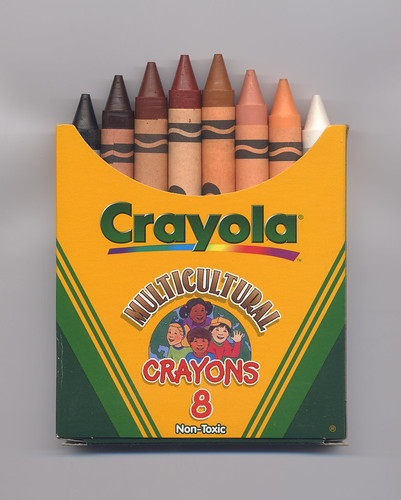
 In my previous post, I discussed the achievement gap between white students and students of color and concluded by saying that some steps in closing the gap would be to work to eliminate racist attitudes in schools and introduce multicultural curricula.
Beverly Tatum, in her book Can We Talk About Race?, describes what schools need to provide for students:
White children will need to be in schools that are intentional about helping them understand social justice issues like prejudice, discrimination, and racism, empowering them to think critically about the stereotypes to which they are exposed in the culture. (20)
Children of color who are in under-resourced, racially isolated schools also need such tools, as well as powerful advocates to ensure that they have committed and well-trained teachers, a challenging curriculum, and other educational resources needed to inspire their own striving for excellence. (20-21)
Like Tatum, I view these points as facts, not suggestions. As much as many Americans want to deny it, racism in the U.S. is a still alive and well, and as I wrote about in my previous post, it manifests itself in the classroom and affects the way students learn. Schools need to change not only what they teach, but how and in what environment they teach it. Besides the basic reasons of social justice and equality for all, as Tatum says, "Our ability to compete in a global economy is dependent on educating all of our students--including those students of color trapped in poverty--at a high level" (21).
The African American Policy Forum, in its Focus on Affirmative Action project, documents some of the social disparities people of color face: discrimination in employment and housing, shorter life expectancies, higher rates of unemployment and imprisonment. It is naive at best to think that schools and education play no role in creating and propelling these disparities. We need to approach educational reform with a multicultural, anti-racist mindset in order to educate all students fairly and attempt to chip away at the broader inequalities people of color disproportionately face.
One way to begin the work of creating inclusive classrooms is to use what Tatum calls the ABC approach:
A, affirming identity, refers to the fact that students need to see themselves--important dimensions of their identity--reflected in the environment around them, in the curriculum, among the faculty and staff, and in the faces of their classmates, to avoid feelings of invisibility or marginality that can undermine student success.
B, building community, refers to the importance of creating a school community in which everyone has a sense of belonging, a community in which there are shared norms and values as well as a sense of common purpose that unites its members.
C, cultivating leadership, refers to the role of education in preparing citizens for active participation in a democracy, and the assumption that leadership must come from all parts of our community. (21-22)
All three parts are essential to creating the types of classrooms that will allow all students, no matter what race, to succeed. The first and most important, though, is A, affirming identity. As Tatum says, "Our ability to engage our students in the kind of education they need, and that our society requires, depends on this foundational concept from which all else can flow" (23). Building community and cultivating leadership both require students who can relate to what they are learning and feel comfortable in their schools, and thus affirming identity becomes the key.
Affirming identity encompasses several areas: How students see themselves reflected in the school environment; what stories are being told about who they are; and what messages are being sent to them, either implicitly or explicitly, in their daily school interactions, and by whom.
How students see themselves reflected in the school environment refers mostly to what types of people make up the school community. The racial, class, and gender make-up of the faculty and staff should resemble the make-up of the student body. A big problem now, and part of the legacy of school desegregation, is a shortage of teachers of color and therefore a decrease in the number of role models for young students of color. Tatum writes that "most students of color today are being taught by a teaching force that is predominately White and female, particularly at the elementary school level" (25). While it might not immediately seem like a huge problem -- White teachers, of course, can be very effective and can indeed be anti-racist -- most White teachers, just by growing up in U.S. society, are inherently prone to racist ideologies, even if they would never actively do something "racist." Tatum, answering the question of whether any teacher can transcend our shared history to affirm rather than assault student identities, says:
Yes, but not without considerable effort and intention. Teachers of all backgrounds must be willing to engage in significant self-reflection about their own racial and cultural identities...to understand the assaulting stories they tell without conscious awareness. (26-27)
It is not impossible for White teachers to be positive role models and make students of all races feel like they have a place in their classrooms, but it does not happen automatically. All teachers, but especially those who are white, should be trained to analyze their own racial identities, the identities of their students, the material they are teaching, and the broader culture of their school. These are important parts of a teacher's development, but they seem to lack the same weight that something like lesson planning may carry. While it is impossible to rank every aspect of a teacher's training on level of importance, it should be noted that developing tools to understand and affirm different identities is indeed important and necessary to improving our classrooms.
Affirming identity also comes from the curriculum -- what stories are being told about who students are. A school may be racially diverse, Tatum writes,
[and] they may be seeing themselves among their classmates, but they may not be seeing themselves in the curriculum in meaningful and substantive ways. (29)
As I discussed briefly in my previous post, students of color may reject or at least be ambivalent about the material they are supposed to be learning since it is so seeped in the dominant white culture of schools. The implied message, even if it is not intended, is that the experiences and history of people of color do not matter as much as those of whites, and, as Meier wrote, "you're not as good, you're unable to, you can't" (140). When so much of our motivation to learn comes from our sense of connection to the material, how can we expect students of color to be motivated when so much of the content denies who they are (or is no more than a token inclusion)?
Currently, many schools use a "Heroes and Holidays" approach to multicultural curriculum development. Students may learn about Martin Luther King, Jr. during Black History Month, or the Chinese New Year, or the Japanese internment camps during a WWII unit, but it is unlikely that any of these lessons would be more than a quick detour off the path of the mainstream Euro-centric curriculum. Instead, curricula need to be shaped to provide stories from outside the mainstream, to question what we have long been taught is the one "true" history, and -- since we all want a good story to tell about ourselves -- to provide historically marginalized youth with the information and feedback to help construct that story and then celebrate them when they do (Tatum 33).
Such an approach would not only affirm the identities of students of color, but would also help white students learn a more realistic portrayal of history, away from the "sanitized versions" that distort reality and obliterate the presence of so many. This would help keep white students from developing a false sense of authority and superiority and possibly question their white privilege, which is a key aspect to keeping the system of racism alive.
Learning truer histories, more than just the "Heroes and Holidays," requires a lot of work, and oftentimes much discomfort, especially on the part of Whites. But, as Tatum says:
There is an alternative to silence and misrepresentation that can affirm the identities of White children as well as build capacity for connection across racial lines in the future. If we were given a full understanding of our past and present, we would learn about the cross-racial coalitions that were built at every period of progress in our history. We would learn about the courage, cooperation, and perseverance demonstrated by Whites in alliance with people of color in response to social injustice. (35)
Although a movement toward true multicultural curricula may be hard, and analyzing our own racial identities and assumptions may be uncomfortable, they are necessary steps in ensuring all students are equally and fairly.
To combat racism (which I believe to be a necessary fight), we need to be anti-racist, and the first step is changing the way our schools look and act to make all students feel like they belong and are valued. By adapting some of the changes I suggested here -- Tatum's ABCs, diverse and self-analyzing school personnel, multicultural curricula -- all students will have a better chance at being able to learn and succeed. And by doing nothing and keeping the culture of schools the same, we are doing everyone a disadvantage by perpetuating structures of privilege and power.


No comments:
Post a Comment